
Latest post
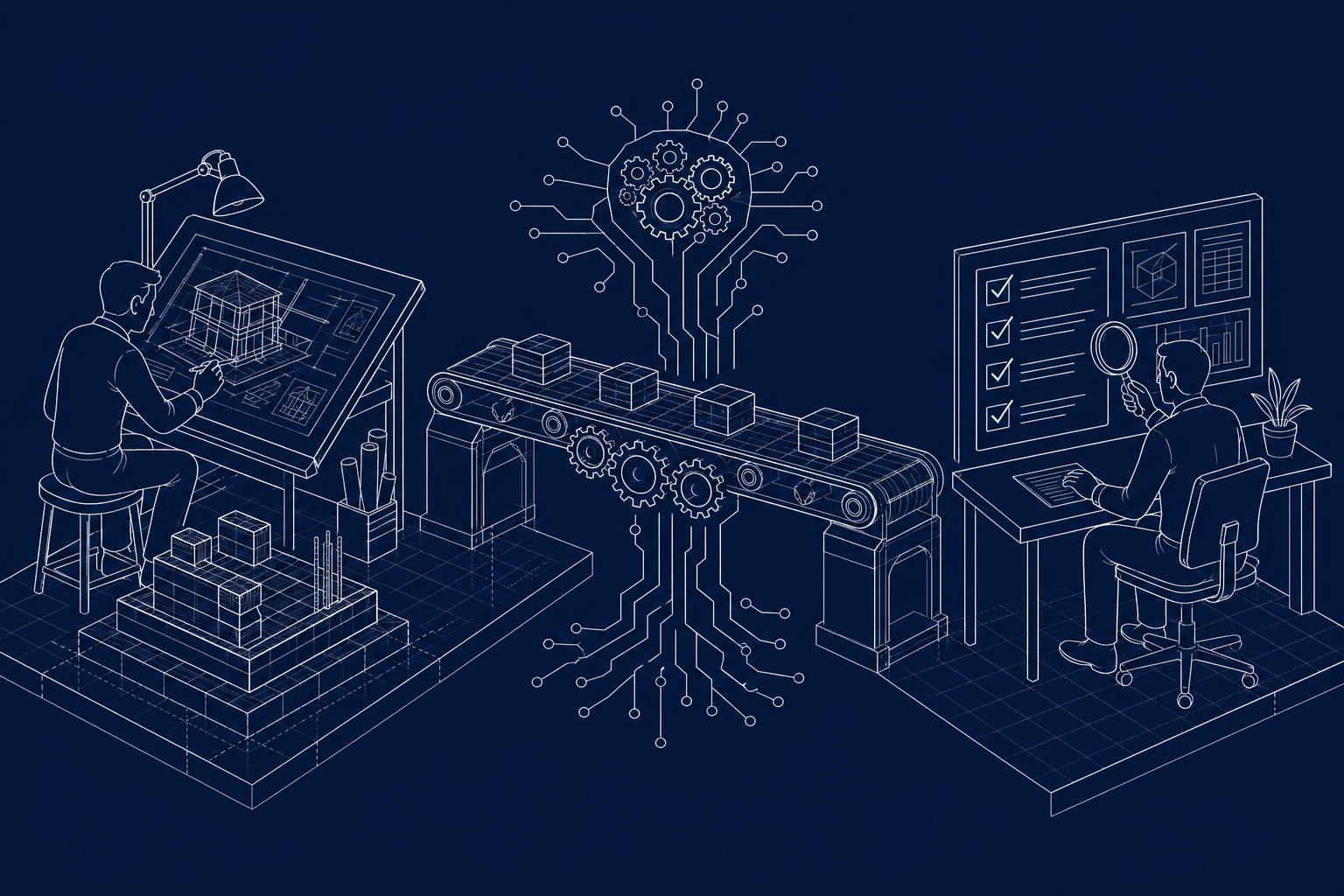
Software teams used to spend most of their time in execution: the middle between foundation and review. As that middle gets absorbed by capable AI, human leverage shifts to the ends: sharper standards upstream and denser judgment downstream. That is structurally positive: but emotionally hard for people whose craft lived in the middle.
Read more →
Mark Hendrickson
I'm building Neotoma, a deterministic state layer for long-running agents. The core problem: agents are increasingly stateful, handling tasks, contacts, transactions, and commitments over time, but their memory is built for retrieval, not truth. It drifts between sessions, overwrites without history, and cannot be traced or replayed. Neotoma treats memory as state evolution: every observation is versioned, every entity snapshot is reproducible, every decision can be replayed. Schema-bound, local-first, cross-platform via MCP, and entirely user-controlled.
The principle underneath is the same one that's driven all of my work: people should control their own data, memory, money, and digital infrastructure, not cede it to platforms that optimize for engagement over truth.
I work as a solo founder in Barcelona, operating with AI agents as a team rather than as tools. Every workflow, email, finance, content, and product, runs through a shared repo and source of truth. The agents follow the same playbook I do. That only works because the state layer is explicit and inspectable, which is exactly the contract Neotoma is designed to provide.
Before this chapter, I spent nearly two decades building products across consumer web, crypto, and startups: writing and shipping at TechCrunch, co-founding Plancast (acquired by Active Network), co-founding KITE Solutions, advising and building with early-stage startups, leading user experience at Hiro for the Stacks blockchain, and running Leather at Trust Machines. You can see the full arc on my timeline.